
The initial Start With Using Notation within Musescore 4
Weekly Project Blog 1
Welcome to my blog, where I’ll be embarking on a musical journey to learn the art of drum set notation using notation software. I’ve always been intrigued by the power of musical notation and its ability to capture the essence of drum set performance. Through this project, I aim to develop my skills in writing drum set music, whether it’s original compositions or transcriptions of existing pieces.
This challenge excites me, as it will push me to explore new frontiers in my drumming and musical abilities. I believe that the knowledge and skills I’ll gain from this project will be incredibly valuable to my career as a drum set player and composer. So, join me on this journey as I dive into the world of drum set notation and discover its limitless potential over the next 8 weeks.
There is a lot to take in....
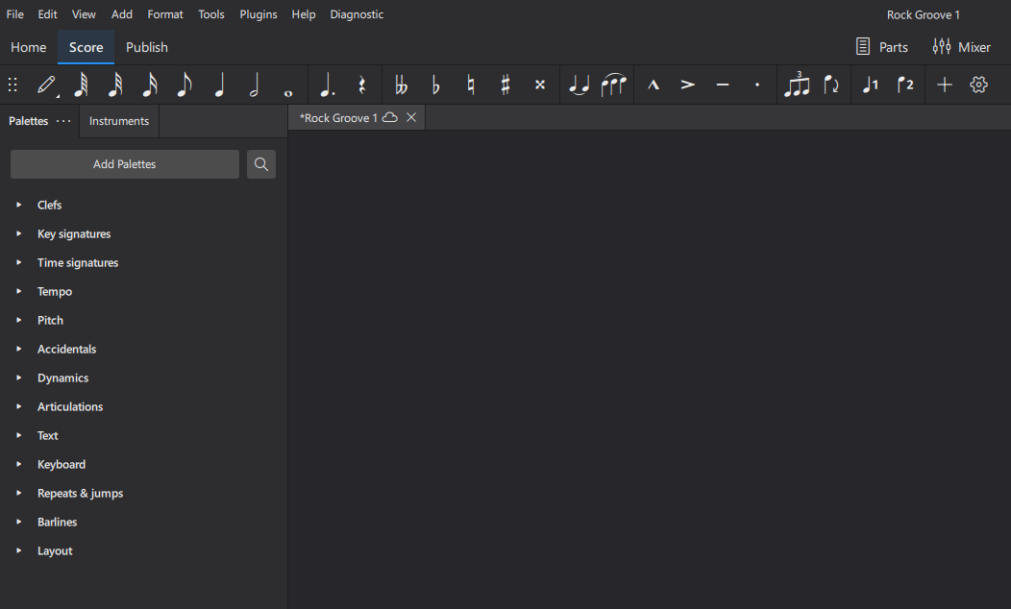
As a beginner in the world of notation software, I quickly realized that there was a lot to learn in order to efficiently create drum set music with this software. I had to delve into the intricacies of Musescore 4, discovering basic shortcuts for editing note duration and mastering the drum set notation editor.

Starting Out Simple
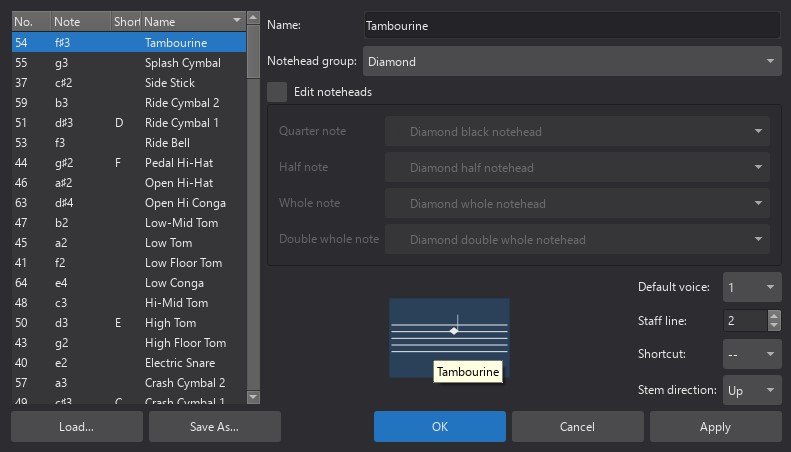
Learning the ins and outs of drum set notation is essential for creating accurate and professional-looking scores, and knowing the right symbols makes it easy to do so. From X’s representing cymbals or crosstick or any time of rim strike, to standard ink notes denoting drums, we’ll be diving into the finer details of how to notate a drum set score.
What Means What?
The world of drum set notation is filled with endless possibilities and Musescore 4 makes it easier than ever to bring your drum set compositions to life. With its Edit Drumset option, you have access to a wide range of sounds and symbols to choose from. For our purposes today, we’ll be focusing on the four essential elements of any drum set: the hi-hat, snare drum, bass drum, and crash cymbal.
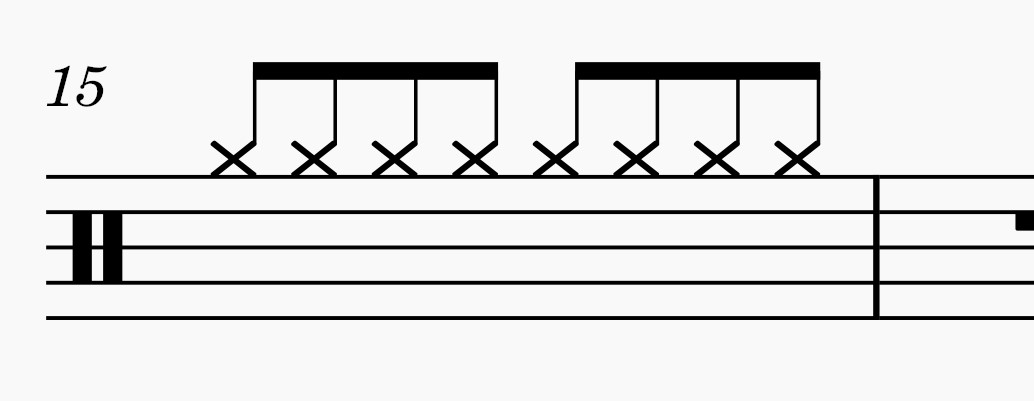
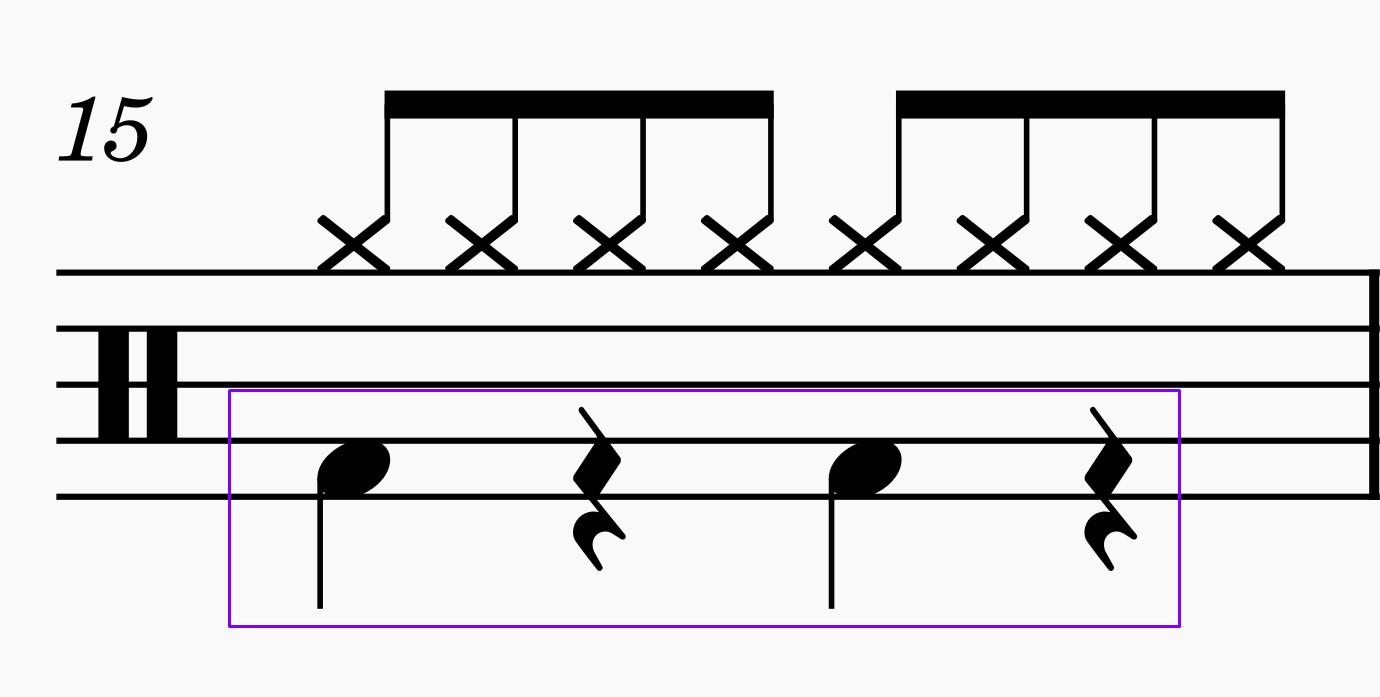
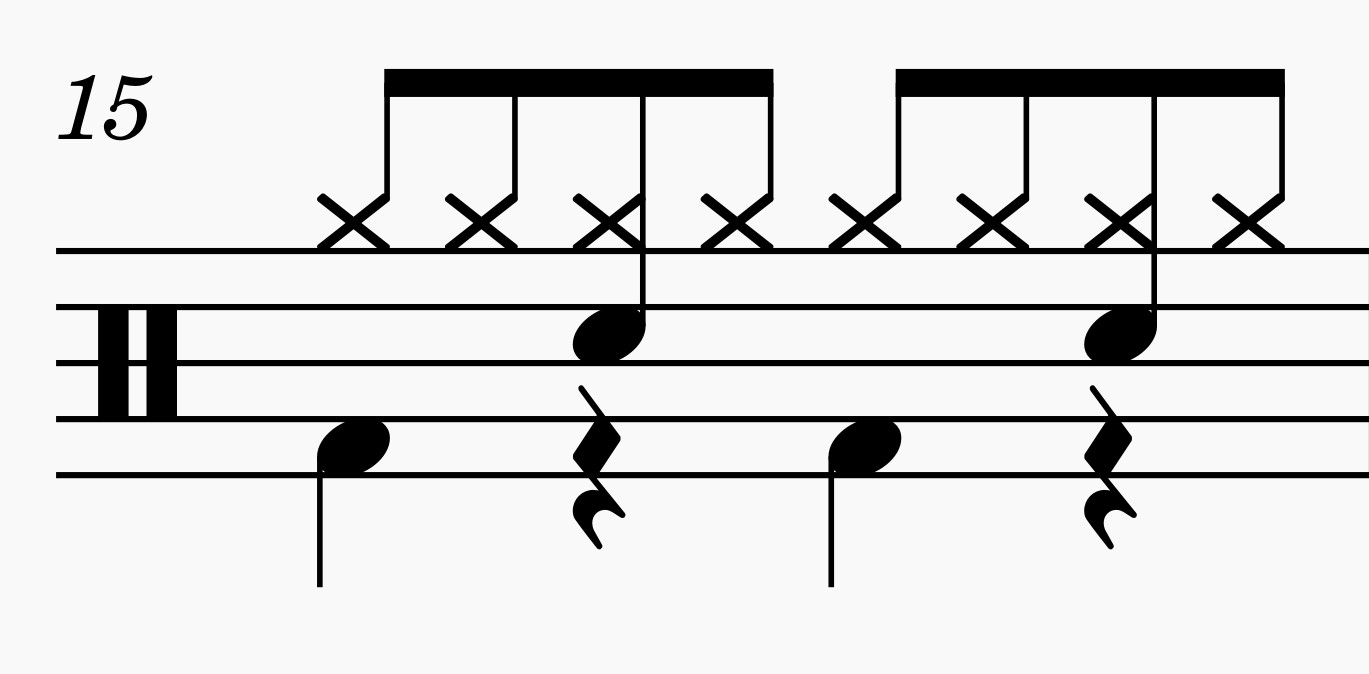
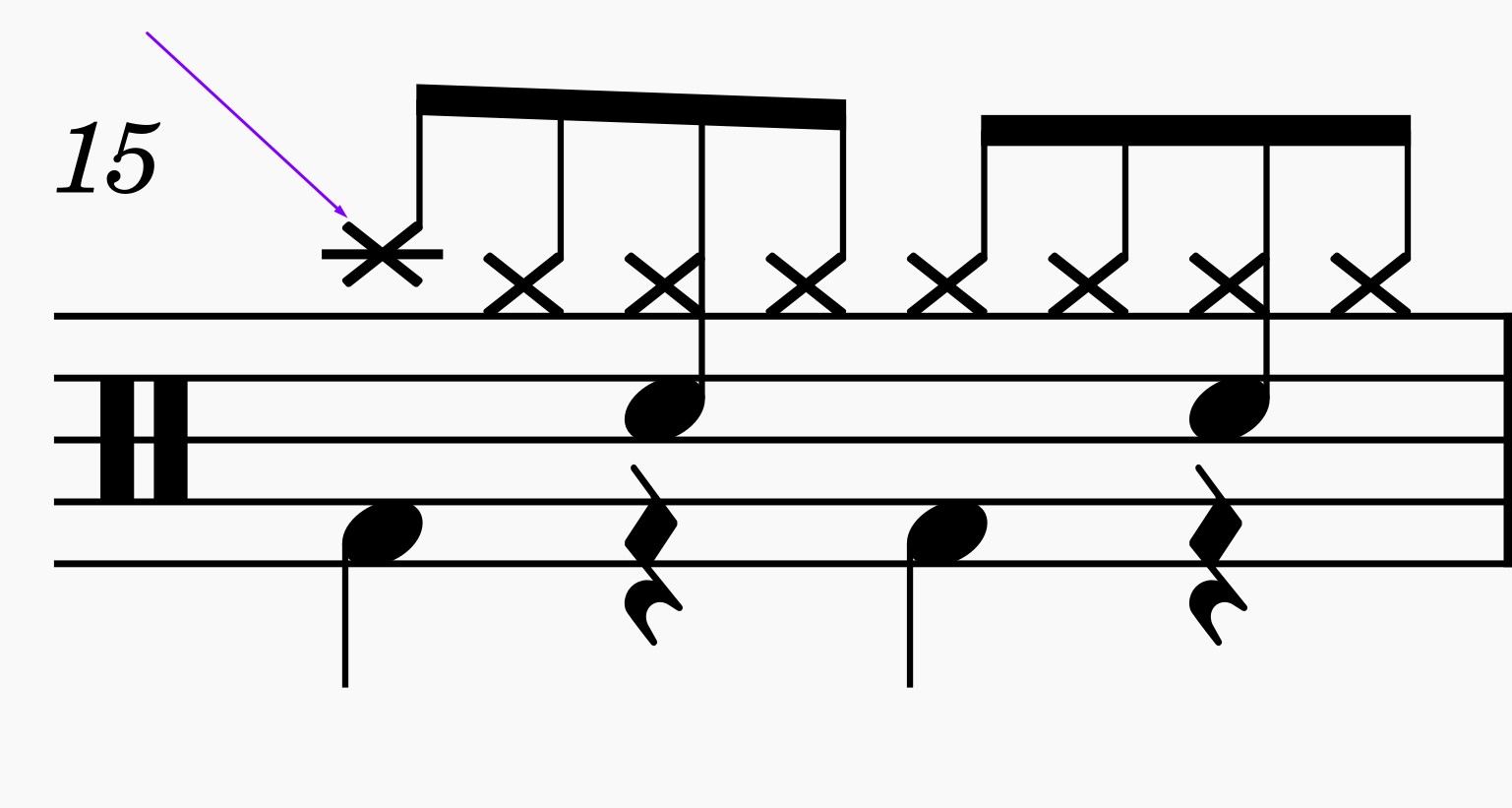
Drum set notation can be a complex and challenging task, but with the right approach, it becomes much more manageable. One of the most efficient ways to notate drum set music, especially basic rock beats, is to think of it as a grid. In this system, everything follows the grid, lining up or splitting it, with the constant eighth notes on the hi-hat serving as the backbone of the grid. This grid-based approach streamlines the process of notating drum set music, making it easier to capture the rhythm and flow of the composition. With knowledge of a typical bass drum pattern on beats 1 and 3, and a snare drum on beats 2 and 4, there is already a basic beat created. Finally for a flashy start, adding a crash cymbal where the first hi-hat eighth note is can transform how the beginning of this beat sounds.
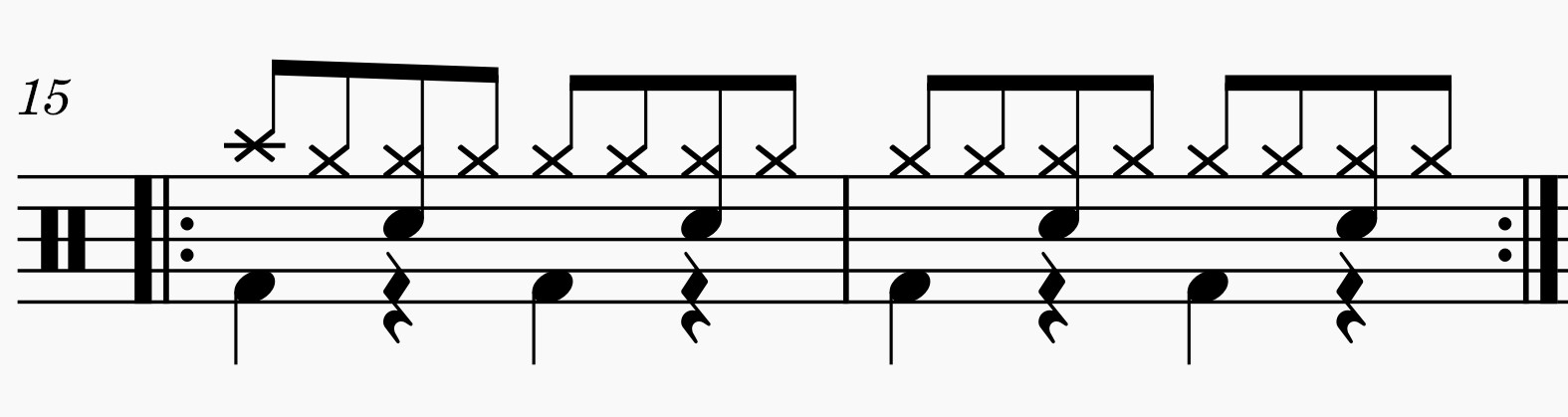
Using what is already there.
When it comes to drum set notation, one of the biggest discoveries I made was the power of repetition. I learned that once you create a great drum set groove measure, you can use it over and over again without much variation. This repetition is especially appealing to the ear, especially in the context of rock music where it’s often better to stay in the pocket and save new ideas for different phrases or quick fills.

It’s not just being lazy with the writing, it adds a level of consistency and familiarity that can make the music more memorable for the listener. This is not to say that every piece should be a monotonous repetition of the same pattern, but rather that incorporating repeating elements can add depth and structure to the overall composition.
Having a Plan and Sticking with it
As a seasoned drummer, I was confident in my ability to translate my drum set skills to notation software, but I soon realized that the journey wouldn’t be as straightforward as I had hoped. Despite my experience playing the drum set, I encountered several difficulties in trying to learn drum set notation with Musescore 4. One such challenge was trying to add a snare drum and hi-hat cymbal at the same time on the same eighth note. To my surprise, adding the snare drum completely removed the hi-hat cymbal, which took some time and effort to fix. It simply takes a lot of paitence to learn and deal with the oddities that may come from a program.
Conclusion/Preview!
This week has been a whirlwind of learning and discovery as I delve deeper into the world of drum set notation. From learning the basic symbols and techniques for notating the hi-hat, snare drum, bass drum, and crash cymbal to getting a handle on the grid system that lies at the heart of creating grooves, I have already accomplished so much. But the journey is far from over, as I am ready to tackle more complex drum beats and grooves next week. With my newfound knowledge and skills, I am eager to see what kind of music I can create and bring to life through notation software. Stay tuned for more updates as I continue on this exciting journey of drum set notation!