
Diving deeper into what is already there in rock grooves
Welcome back!
Welcome to my blog where I will be exploring the art of drum set notation using notation software, specifically Musescore 4 . Over the next 8 weeks, I will be delving into the vast potential of drum set music, from learning to write basic rock measure grooves to maybe not so basic rock grooves, and eventual different styles.
In the first week of my musical journey, I was able to write a very basic rock measure groove using notation software. However, that was just the beginning. This week, I plan to continue to explore the possibilities of this simple beat and zoom in on just how much potential it has.

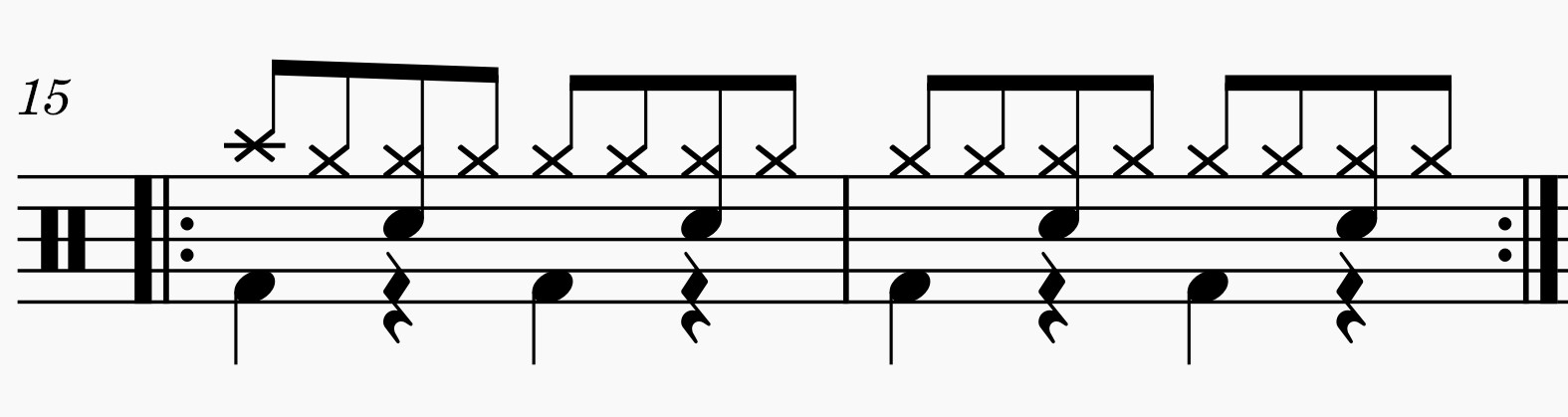
Without writing a whole new groove, what can be done with what we have?
In my last blog post, I talked about the power of repetition in drum set notation, and how creating a great groove measure can be used over and over again with little variation. Today, I’ll be focusing on adding fills to something that has already been created. While repetition is great for staying in the pocket, adding fills is the perfect way to add dynamics and excitement to a groove, and I’m excited to explore this concept in more detail.

Reminder about the different sound options
Today, we will be diving deeper into the four essential elements of any drum set: the hi-hat, snare drum, bass drum, and crash cymbal. These four components create the foundation of any groove and are essential to every drum set player’s skill set. In addition to these essential elements, we will be adding a couple of high and low tom sounds to our mix to enhance the fills written for the basic groove. With the help of Musescore 4’s Edit Drum set option, we’ll have access to a wide range of sounds and symbols to choose from, allowing us to create a unique and dynamic drum set composition. Just like last week however I will continue to hone in on keeping it simple, just adding a high tom and a low tom.
Expanding on the potential of the grid.
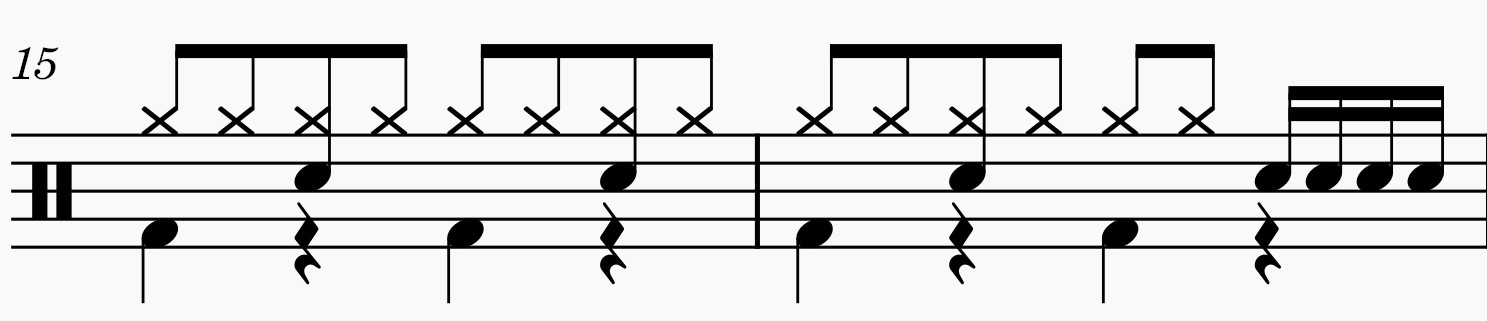
We cannot overlook the importance of creating exciting and dynamic fills to complement the basic groove. The grid system that we use to write out the basic rhythm can also be used to create impressive and compelling fills that can elevate any drum set performance. By simply adding some sixteenth notes on the snare drum on beat four of measure 2, the progression already looks more interesting and lively. This foundation serves as a launchpad for the limitless potential of writing power that the grid system allows for. Though it may seem basic at first, as we continue to add new elements to our composition, we’ll discover just how much can be accomplished with just beat 4 and the foundational rhythm written alone.
Experimentation with a general idea
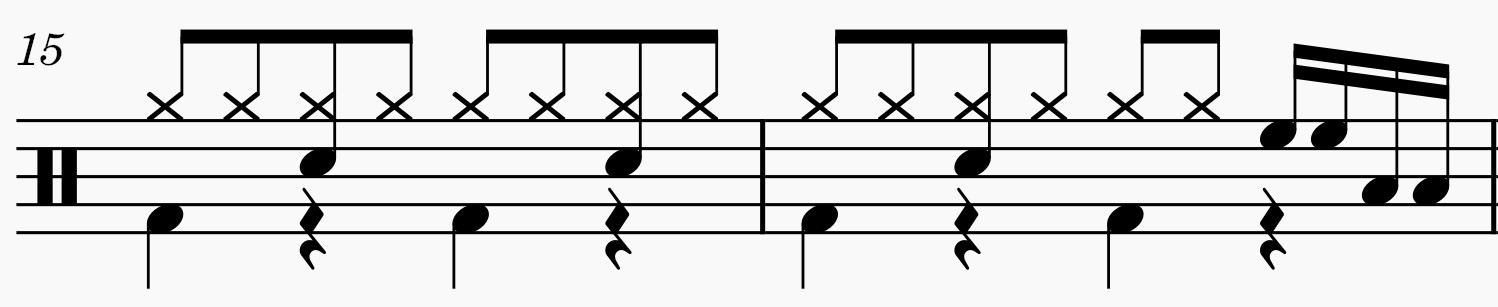
The beauty of drum set notation lies in its limitless potential for creativity and experimentation. The picture on the left is a simple 2 measure groove with a sixteenth note fill on beat four of measure 2, making it a great foundation for beginners. However, the picture on the right shows the same measure rhythmically, but with the sixteenth notes shifted to two hits on the hi tom and two hits on the floor tom. This change alters the movement within the composition significantly, much like a melodic progression. While the rhythm stays the same, this small shift adds a new level of excitement and interest to the composition. Everything is still really simply in terms of how the grid is being used, yet there is a powerful tool here that can be expanded upon further.
As long as it in time, it will always work
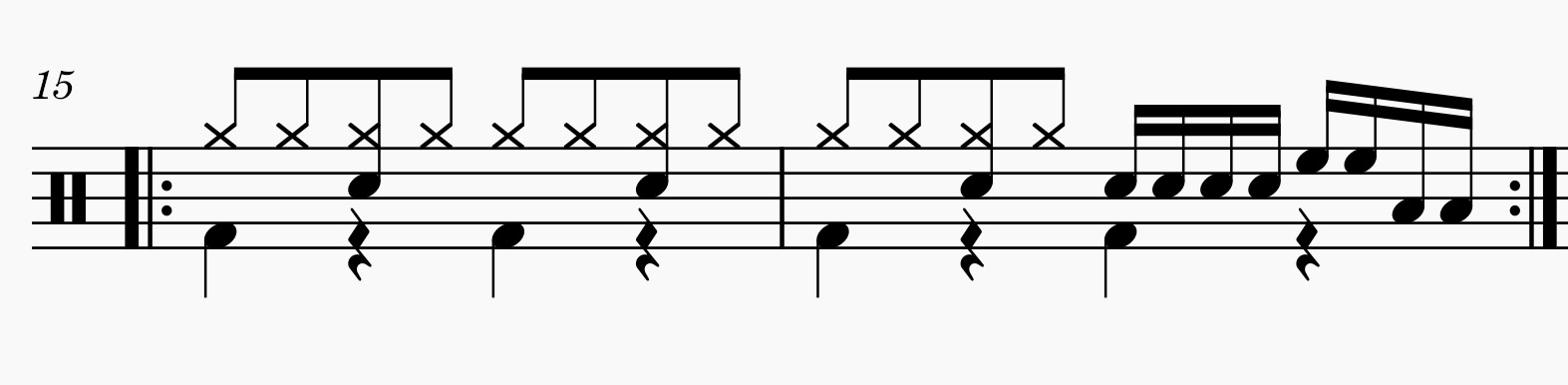
Adding fills to a basic drum set groove can take it to the next level and create an interesting and dynamic composition. By incorporating the hi tom and low tom sounds, we can create a progression of notes that adds movement and excitement to the overall sound. By shifting the sixteenth note rhythm from the snare to the toms, we can create a melody-like progression that is both rhythmically interesting and pleasing to the ear. By placing the snare drum sixteenths back on beat 3 and ensuring the fill returns to the main groove, we can maintain the overall flow of the composition. As we continue to add more notes for fills, the possibilities are limitless, especially as the concept of shifting the combinations of different drums with the same rhythm will always be a powerful option.

Using what is already there...Again!
In drum set notation, repetition can be a powerful tool for creating a great groove measure. This same concept can also be applied to fills, whether it’s by playing the same notes repeatedly or using the same rhythm for the fills while altering drums being played. The repetition of a certain rhythm can be especially effective in rock music, where it’s often better to stick to the basics and save more complex ideas for other sections. It’s not necessary to come up with completely new and elaborate ideas every time a fill is needed. By using the same rhythmic patterns as the main groove, and varying the drums being played, the fills can sound both familiar and interesting.
In music, repetition can serve a powerful purpose in creating a sense of familiarity and structure. When used correctly, it can add depth and consistency to a composition. This concept is not only limited to drum set grooves, but also applies to fills, where incorporating repeating elements can make the music more memorable for the listener. While fills can naturally become more complex, it is important to ensure that they still arrive back to the groove in a convincing manner to maintain the overall cohesiveness and pleasing sound of the composition.
Having the patience to be open with experimentation and mistakes
When it comes to experimenting with writing basic fills in drum set notation, using software can be both helpful and frustrating. Sometimes, the software can do something crazy like adding a borderline unreadable rest notation that fills up the entire bar. However, by making mistakes, it’s easier to learn how to avoid them in the future. This not only saves time but also ensures that the final product is clean and easy to read. As I continue to work with the software, I’m getting better at spotting and fixing these mistakes quickly.
Conclusion/Preview!
This week’s blog post delved into the world of fills and how they can add excitement and complexity to drum set compositions. I highlighted the importance of repetition, experimentation, and the use of the grid system when writing fills, and how that correlates to giving a sense of progression to the writing. Next week’s post will focus on general writing guidelines, specifically what is comfortable and feasible to play on the drum set. One of the biggest pitfalls in Drum set writing is when a part looks poorly written and hard to play when it doesn’t need to be, or the part really is impossible to play. I will highlight techniques for balancing complexity and playability to create music that not only sounds great, but is also enjoyable to perform. See you next week!