
Expanding the bass drum patterns within the basic rock beat
Welcome back!
Welcome to my blog where I will be exploring the art of drum set notation using notation software, specifically Musescore 4 . Over the next 8 weeks, I will be delving into the vast potential of drum set music, from learning to write basic rock measure grooves to maybe not so basic rock grooves, and eventual different styles.
In the first week of my musical journey, I was able to write a very basic rock measure groove using notation software. However, that was just the beginning. This week, I plan to take the concepts learned so far and apply them to developing much more complex bass drum/kick drum foot patterns within the rock groove we already have.

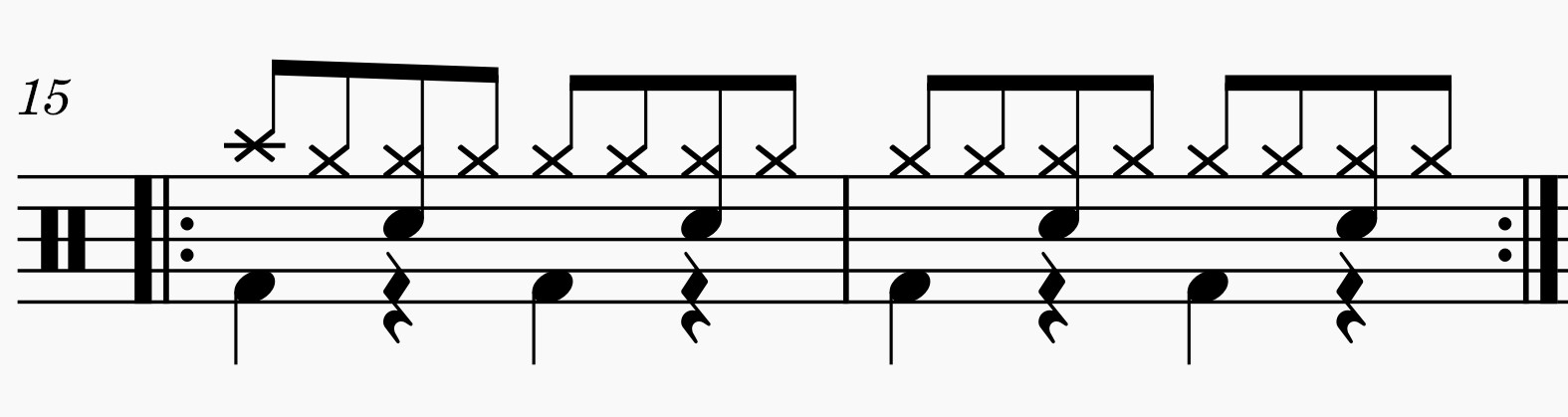
Reminder of the basic formula
Now that we’ve established a strong foundation in the basic rock beat, we can finally start exploring more complex rhythms and patterns. With a solid understanding of where the beats and subdivisions fall, we can now turn our attention to the right foot and begin incorporating it into our playing within the context of the grid. This opens up a whole new world of possibilities and allows us to create more intricate and interesting drum parts. Using the basic rock beat above, we can just add our new rhythms into what we have already written. It’s exciting to see how far we’ve come and I can’t wait to see where we’ll go next as we continue to build upon these fundamental skills.
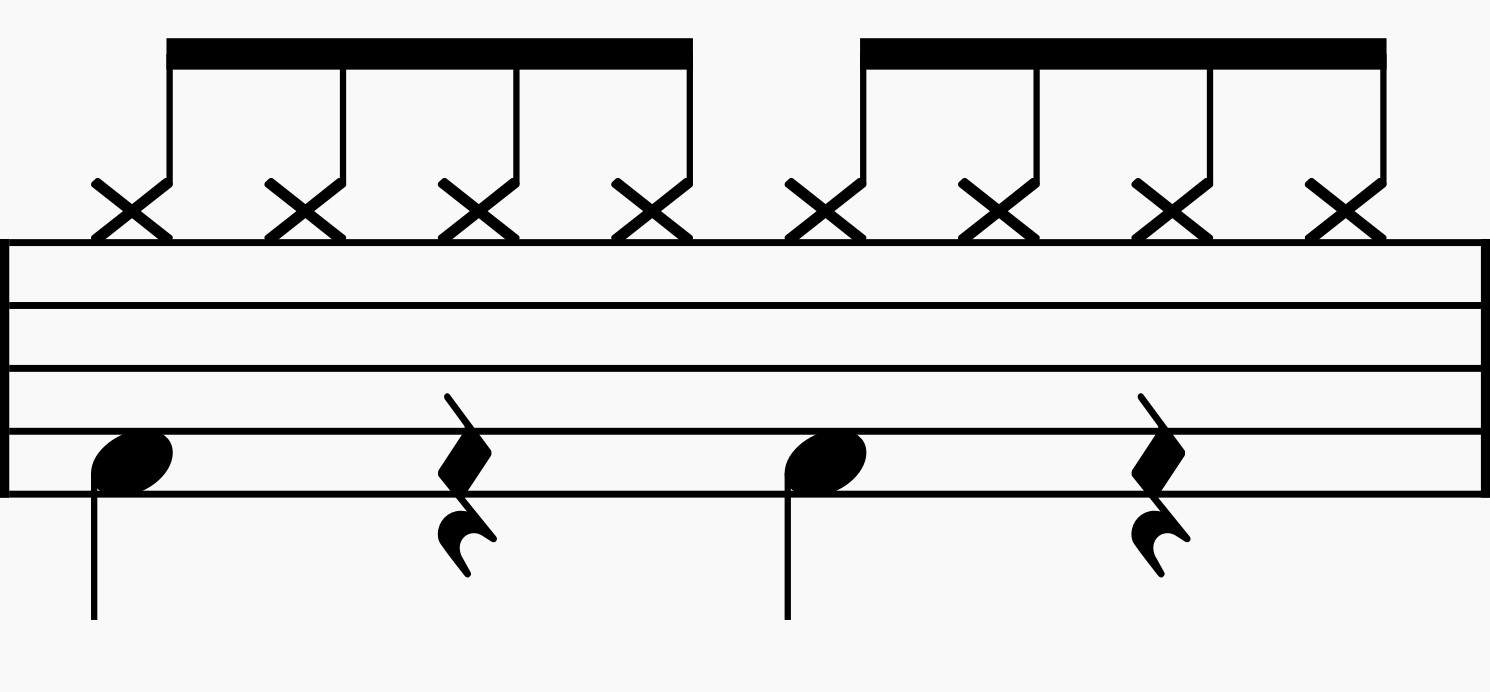
Reminder about the grid in regards to kick pattern
Now that we’ve established the basic rock beat and understand how it falls within the grid system, we can start to add more complexity to our drumming. In particular, we can focus on the bass drum or right foot, and use the grid system to create more intricate patterns. We’ll start with the basic pattern of the bass drum on beats 1 and 3 and experiment with adding more notes around these beats. This will allow us to create more interesting and dynamic grooves, without sacrificing the foundational rhythm. By continuing to use the grid system, we can explore different patterns and even experiment with placing them in different places besides beats 1 and 3. For now however, we will focus on adding more complexity with this main foundation.
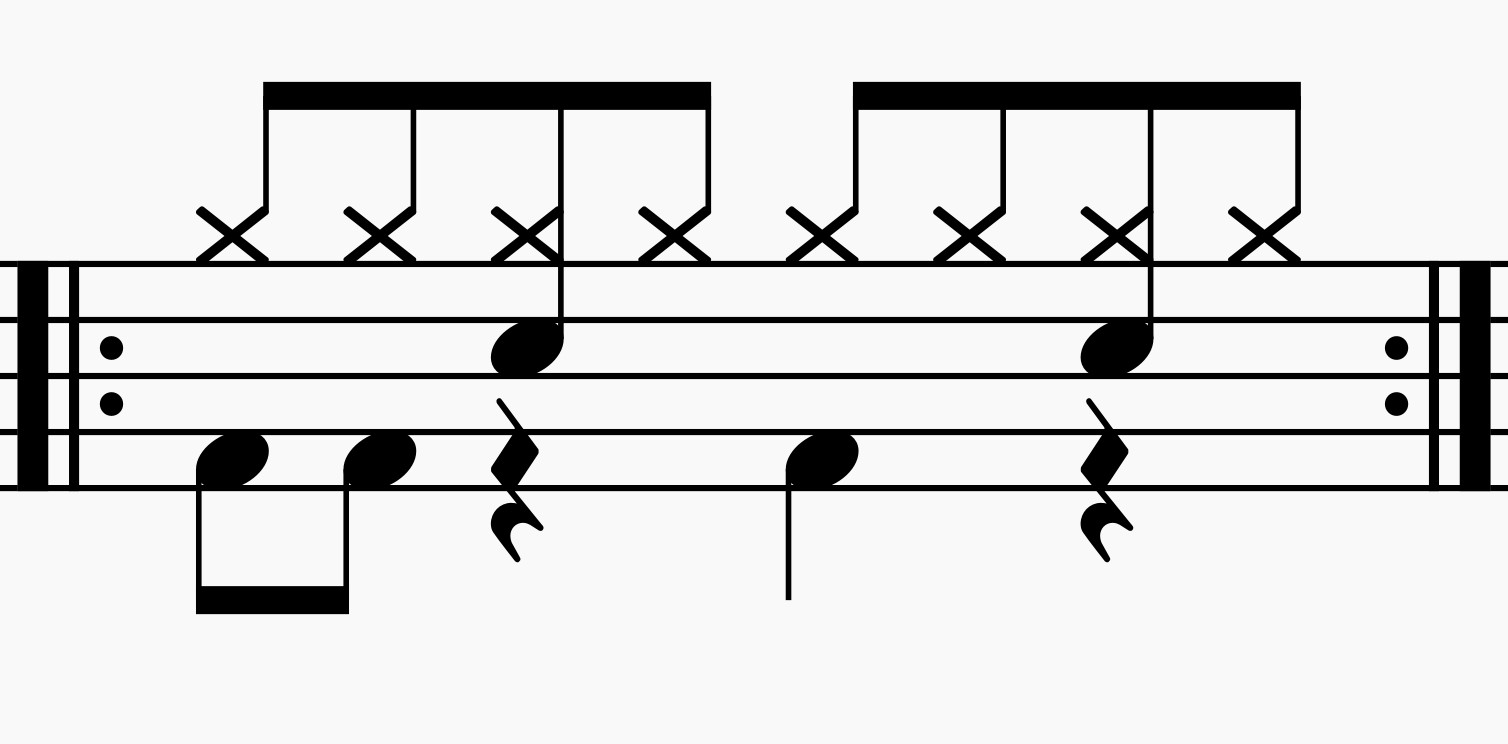
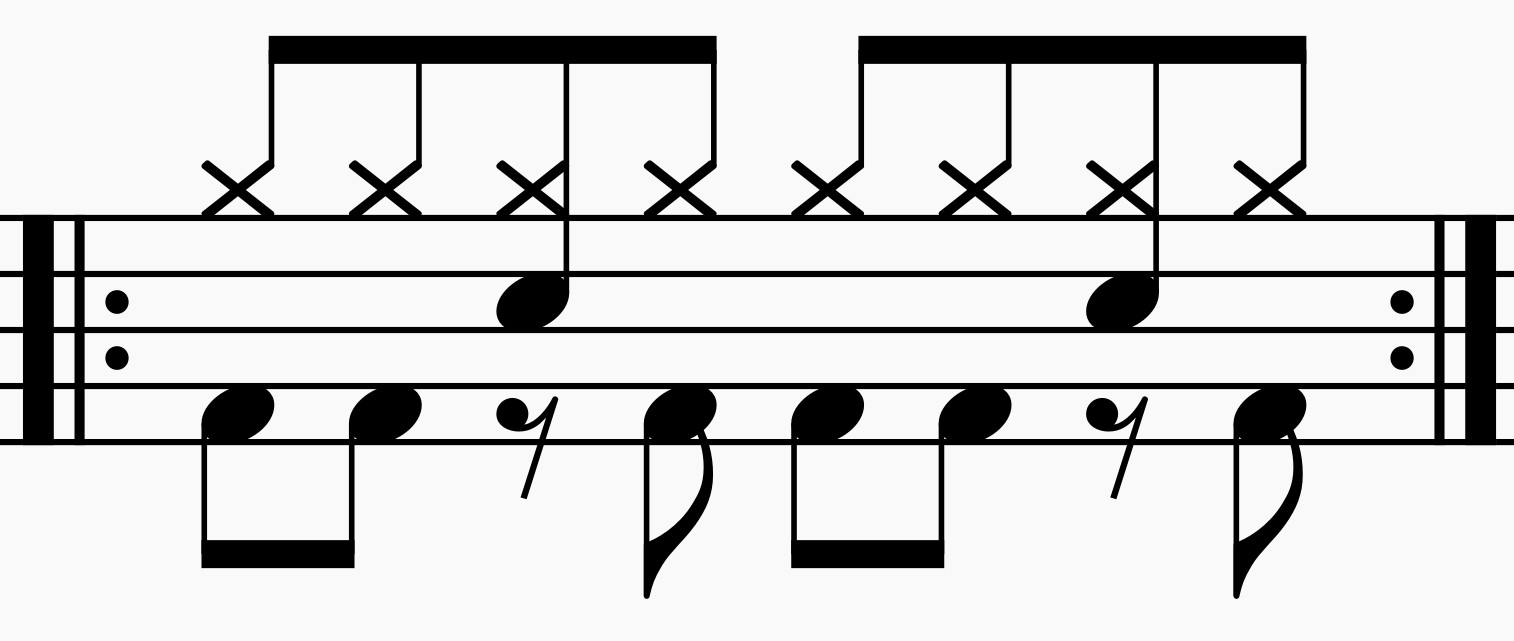
Didn’t do much, but already a huge difference
By simply adding an extra kick on the “and” of beat 1, we can transform the basic rock beat into an entirely different groove. It’s amazing how just one small change can create a whole new sensation. Similarly, by adding another eighth note on the “and” of beat 3, we can further modify the groove. These alterations may seem small, but in the context of a one-measure drum set groove, they can have a significant impact. It’s fascinating to see how much variety we can create by building on a basic foundation and using the grid system as a guide.
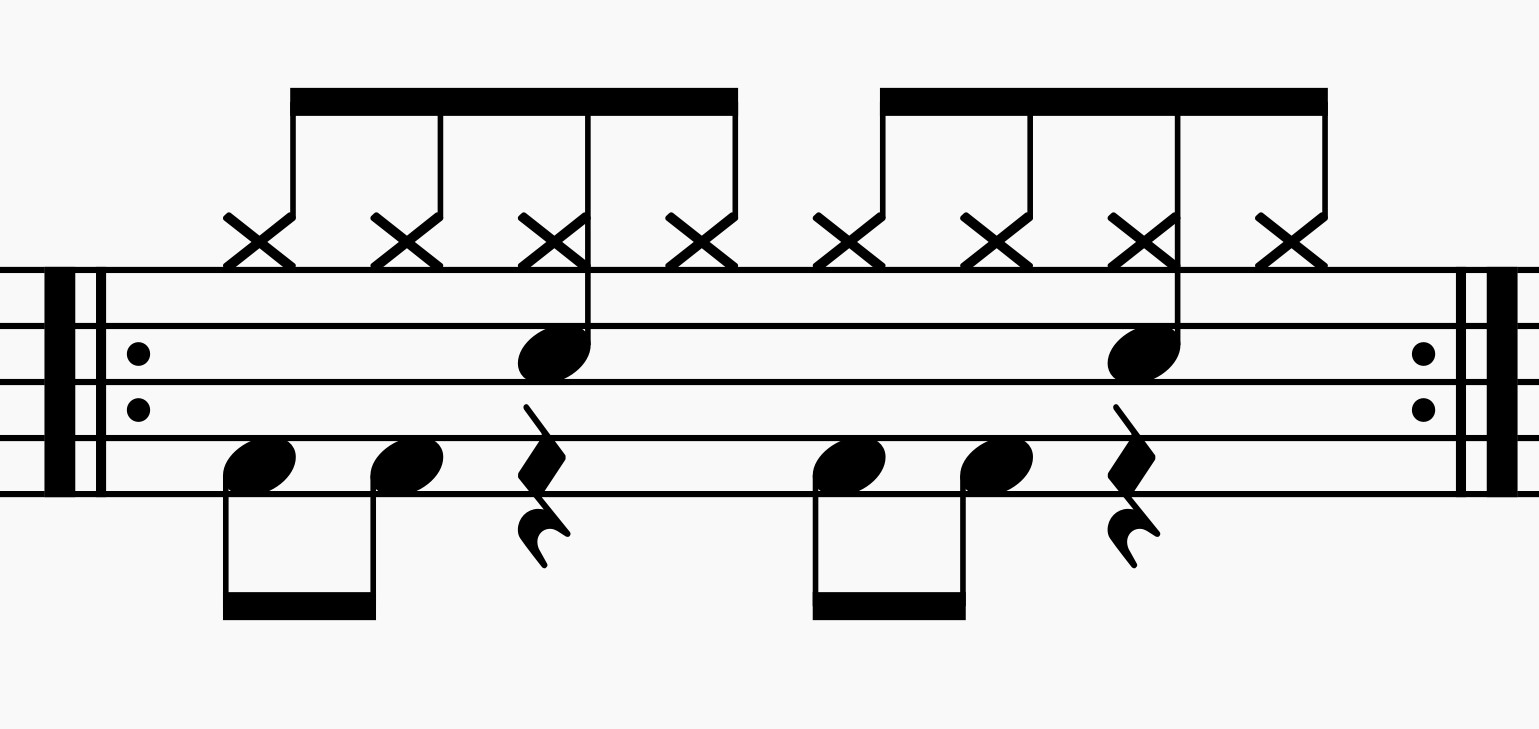
Every eighth note is filled, but its still a great groove
In this new groove, we can see how every eighth note is filled with the bass drum, splitting every eighth note around the snare drum hit that remains on beats 2 and 4. While it may seem like only a small change, the added bass drum kicks create a sense of direction and a completely different groove than the previous examples. Even without the use of other instruments like toms or cymbals, we are still able to expand greatly on the types of grooves we can create by just focusing on one instrument within the drum kit. This further emphasizes the importance of understanding and utilizing the grid system to add complexity to our drum set writing.
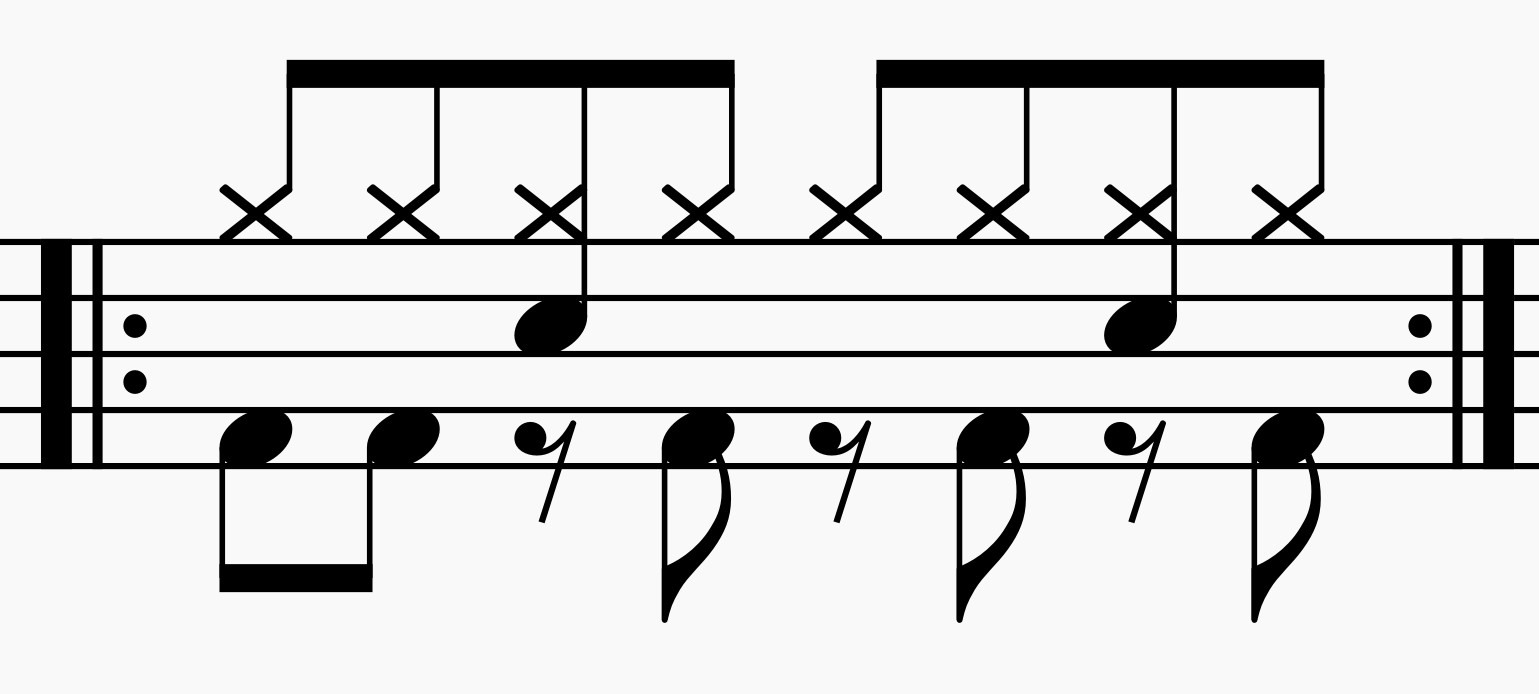
Taking out some specific notes can add complexity too!
Just as we’ve seen before, adding a couple of bass drum kicks to the previous example can lead to an entirely new groove, the same can be said with taking away some of those notes. It’s amazing how much of a difference small changes like this can make in drum set playing. While it’s important to fill into the grid and experiment with different rhythms, sometimes adding and then taking away specific notes can have an even greater effect on the overall groove. As we continue to explore the grid system and play with different patterns, we’ll find that the more off-set the rhythms become, the more groovy and exciting they can get. It’s a powerful tool within the toolkit, and one that we can use to create endless possibilities for our music.
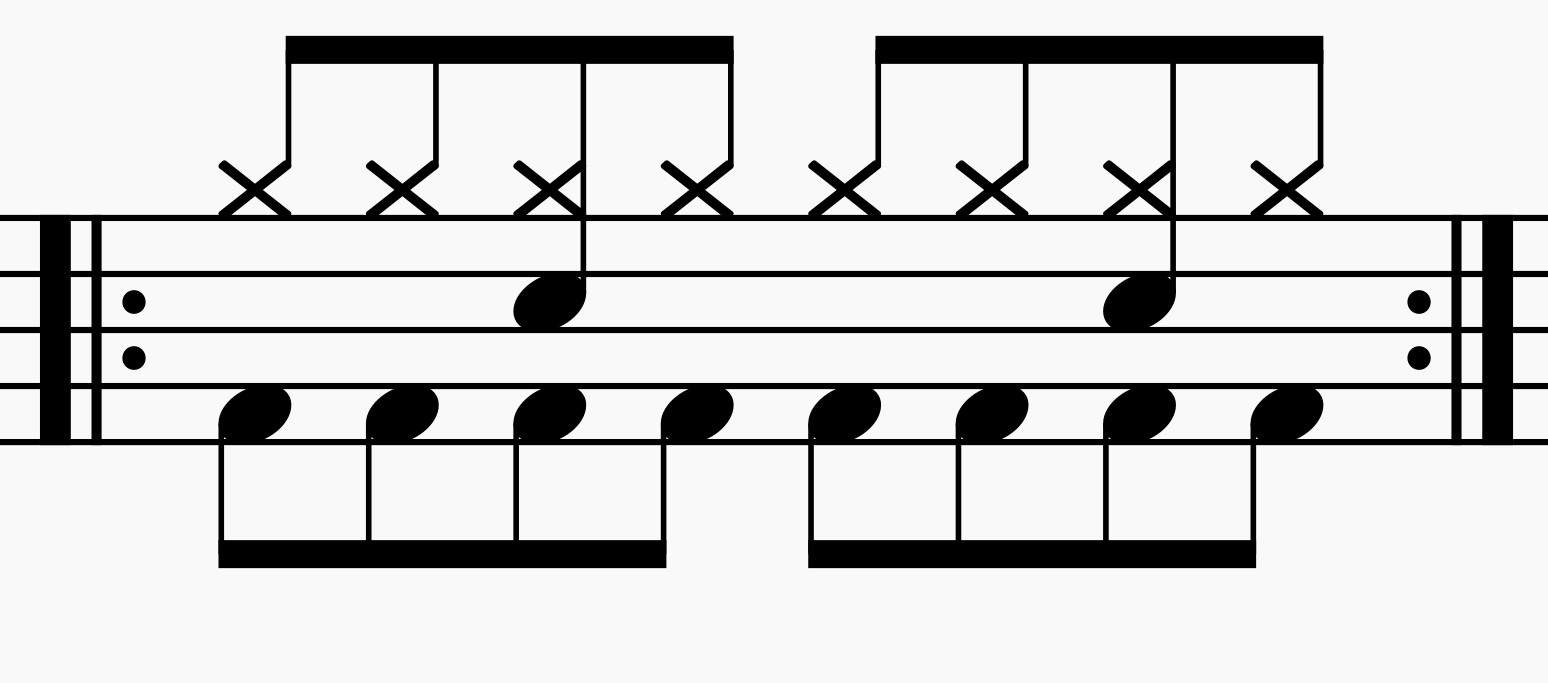
Adding more notes to the bass drum can create a completely different feel to a groove, as we’ve seen in previous examples. But what if we filled in every eighth note with the bass drum, even at the same time as the snare hits on beats 2 and 4? Surprisingly, it still works great. The key is to always think about what each limb is doing and whether it’s feasible to play. As we discussed in last week’s blog, it’s important to keep in mind the limitations of drum set writing when creating more complex grooves. In this example, the groove is still relatively easy to achieve, making it a great addition to any drummer’s repertoire.
Knowing how to properly expand the intricacies without sacrificing important topics
As we continue to delve deeper into the world of drum set playing, it can be tempting to want to move on to more complex and intricate rhythms and grooves without giving much thought to the basics. However, it is crucial that we don’t sacrifice the fundamental concepts that we’ve previously learned in order to progress to more advanced techniques. Building a strong foundation is essential in any craft, and drumming is no exception. Understanding why certain rhythms and grooves work is key in being able to create something that is both complex and groovy.
It’s important to remember that even seemingly crazy drum set grooves are rooted in the foundational concepts we’ve learned so far. It’s the combination of these basics with the addition of more complex patterns that make these grooves stand out. Therefore, we must continue to practice and reinforce the foundational concepts while also exploring new ideas and techniques. Only then can we truly create unique and interesting drum set grooves that still maintain a solid sense of groove and rhythm.
Conclusion/Preview!
In this blog post, we focused on the idea of adding more notes to the groove through the use of the bass drum. This allowed for a more complex rhythmic intensity that could bring out different voices within the piece. It is important to remember the constant juxtaposition between the high sound of the snare drum and the low sound of the bass drum, and to treat them as different voices talking back and forth to each other. As we continue to explore more complex grooves, it’s important to keep pushing what can be achieved while still maintaining a strong foundation in the basics. In the next post, we will dive even deeper into the complexities of drum set writing as always, including going deeper into the subdivision of the grid by going into the usage of the sixteenth subdivision.